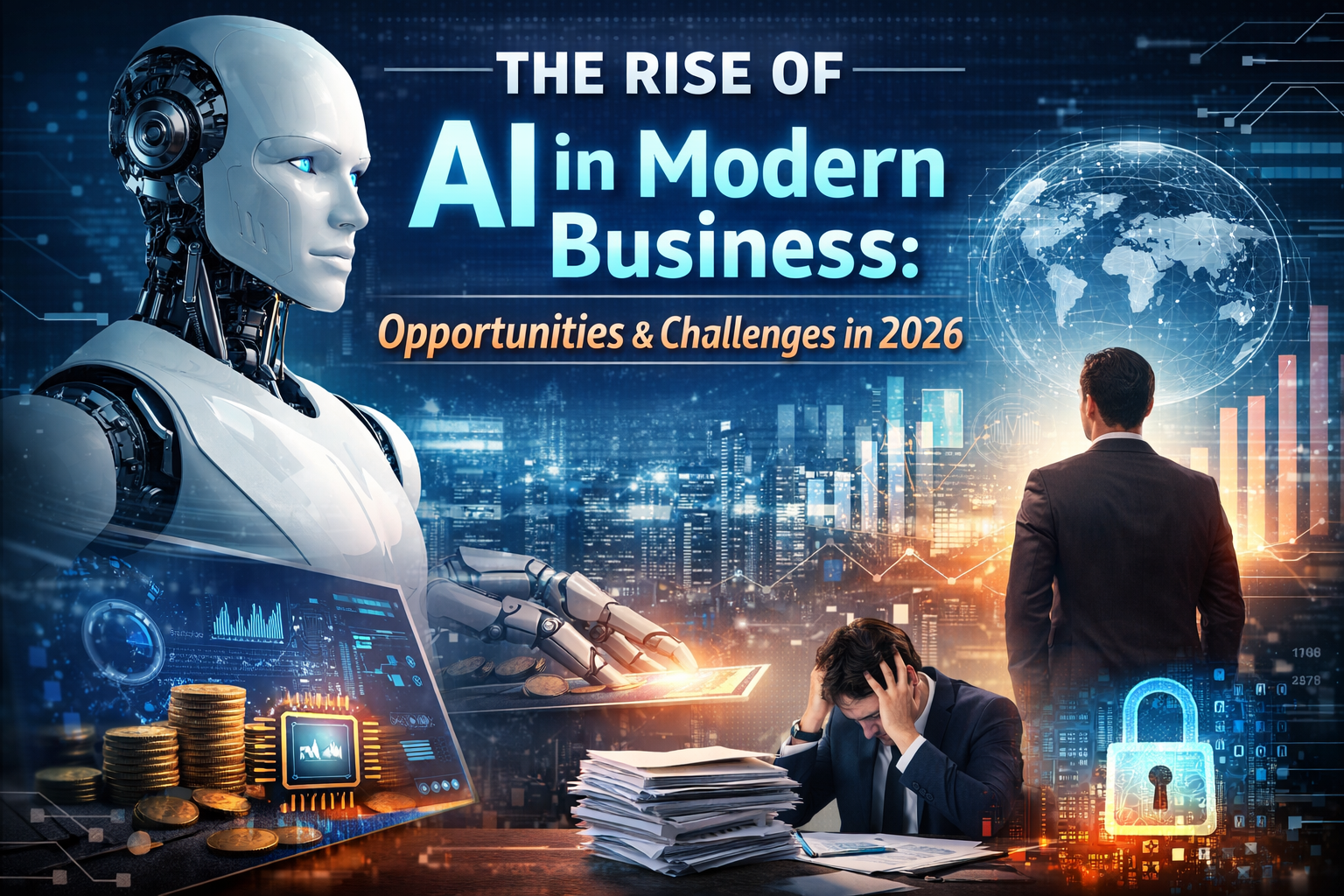
Artificial Intelligence (AI) is no longer a futuristic concept — it has become an integral part of modern business. From small startups to global enterprises, AI is reshaping operations, customer experiences, marketing strategies, and decision-making processes. Businesses that fail to adopt AI risk falling behind in an increasingly competitive marketplace.
In 2026, AI adoption is not just a competitive advantage — it’s a necessity. Companies across industries are leveraging intelligent technologies to streamline processes, reduce costs, and improve efficiency. The ability to implement AI effectively can define the leaders of tomorrow.
How AI Is Transforming Businesses
Smarter Decision-Making
One of the most impactful applications of AI is in data-driven decision-making. Companies are using AI-powered analytics to analyze massive datasets in real time. By identifying patterns, trends, and customer preferences, businesses can make more informed strategic decisions. This reduces guesswork, optimizes resource allocation, and improves overall operational performance.
For instance, predictive analytics can help retailers forecast demand, allowing them to manage inventory efficiently and reduce waste. Similarly, financial institutions use AI to detect fraudulent transactions and mitigate risks instantly.
Automation of Repetitive Tasks
AI is increasingly automating routine business processes, freeing human resources for higher-value work. Common areas of automation include:
- Customer support through intelligent chatbots
- Data entry and record management
- Automated email responses
- Supply chain and inventory management
This automation not only reduces operational costs but also improves accuracy and speeds up workflows. Companies that integrate AI-driven automation gain a significant competitive edge.
Enhancing Customer Experience
Personalization is now a critical factor in customer satisfaction, and AI makes it possible at scale. AI systems track user behavior, purchase history, and preferences to deliver highly relevant recommendations and content.
Businesses using AI for personalization often see higher engagement, improved customer retention, and increased sales. From e-commerce platforms to service-based industries, AI-powered customer experience solutions are revolutionizing how companies interact with their clients.
A key resource for understanding this transformation is AI applications in business, which explores practical strategies and case studies for integrating AI into daily operations.
Benefits of AI in Business
Adopting AI offers several clear advantages:
- Increased efficiency: AI can process tasks faster than humans, saving time and resources.
- Reduced errors: Automation minimizes human mistakes in repetitive tasks.
- Cost savings: AI can optimize processes, reducing operational expenses.
- Competitive advantage: Businesses using AI strategically often outperform competitors.
- Scalability: AI allows businesses to handle larger workloads without proportional increases in staff.
These benefits make AI a strategic priority for businesses looking to innovate and grow sustainably.
Challenges of Implementing AI
Despite its potential, AI adoption comes with challenges:
High Initial Investment
Implementing AI solutions requires upfront investment in software, hardware, and training. Smaller businesses may find this barrier difficult, but cloud-based AI solutions and scalable tools are helping lower the cost of entry.
Data Privacy Concerns
AI systems rely heavily on data, and ensuring compliance with privacy regulations is critical. Mishandling data can lead to fines, reputational damage, and loss of customer trust.
Workforce Adaptation
Employees need training to work alongside AI systems. Resistance to change can slow down adoption, and businesses must invest in education and change management to integrate AI effectively.
Continuous Maintenance
AI systems require regular monitoring, updating, and retraining. Unlike traditional software, AI evolves with data, which demands ongoing oversight.
The Future of AI in Business
Looking ahead, Future of AI in Business is expected to become more accessible and user-friendly, even for small and medium-sized enterprises. No-code platforms, AI-as-a-Service solutions, and cloud-based tools are democratizing access to advanced technology.
Companies that adopt AI strategically will not only improve operational efficiency but also create innovative products and services that redefine their industries. Businesses ignoring AI risk falling behind in a rapidly evolving market.
From enhancing decision-making to delivering personalized customer experiences, AI is transforming the landscape of modern business. Understanding the potential, preparing for challenges, and integrating AI strategically will define the leaders of 2026 and beyond.