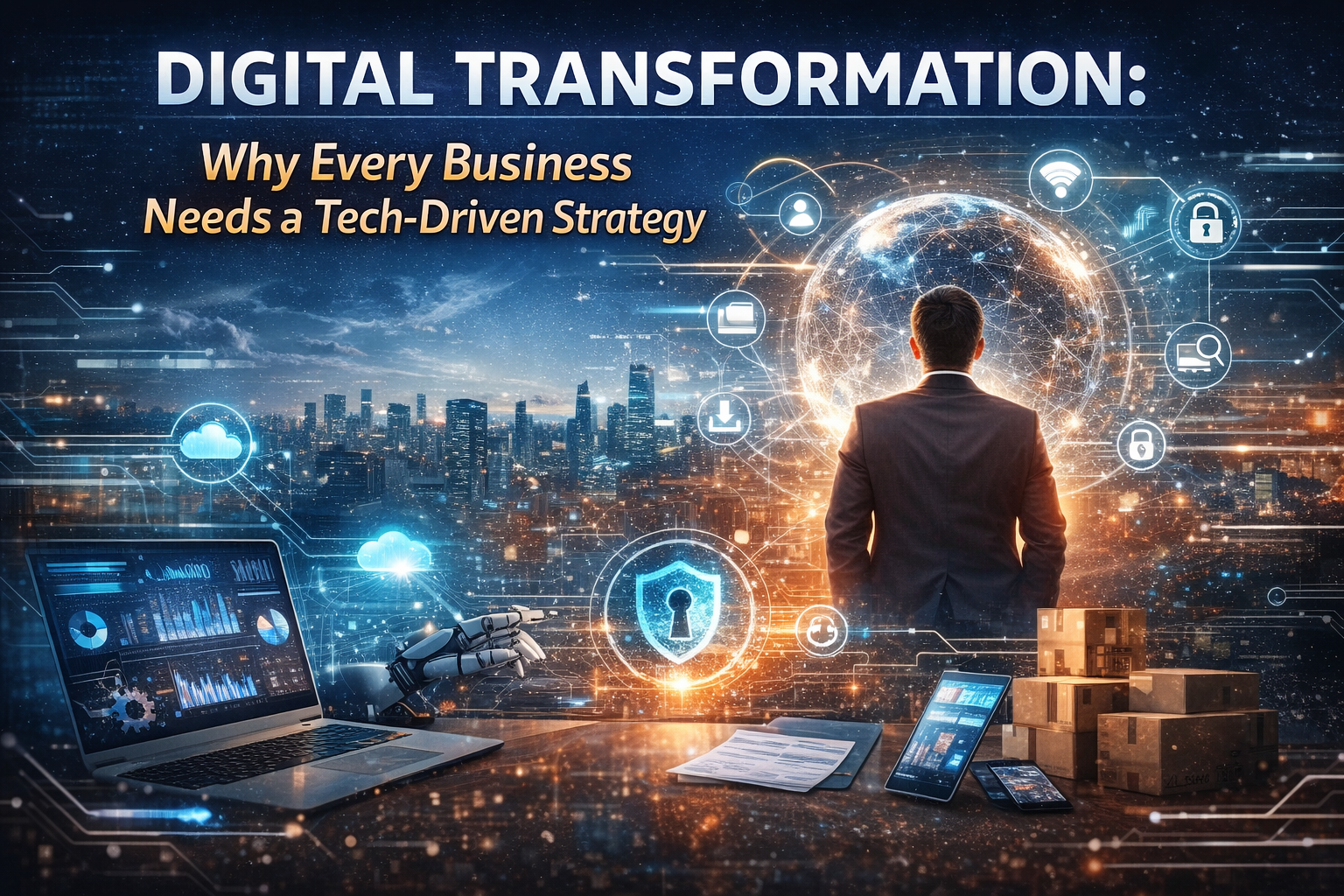
In today’s fast-moving business environment, digital transformation is no longer optional it’s essential. Companies that fail to embrace technology risk losing relevance, efficiency, and competitiveness. Digital transformation involves integrating technology into every aspect of a business, from operations and marketing to customer experience and employee collaboration.
By adopting a tech-driven strategy, organizations can streamline processes, improve decision-making, enhance customer engagement, and uncover new revenue opportunities. In 2026, businesses that fail to embrace digital transformation may struggle to keep up with their tech-savvy competitors.
What Is Digital Transformation?
Digital transformation goes beyond simply using digital tools. It requires a fundamental change in how organizations operate and deliver value to customers. Core elements of digital transformation include:
-
Cloud computing: Enables remote access, scalability, and cost savings.
-
Automation tools: Streamline repetitive tasks and reduce human error.
-
Data analytics: Provides actionable insights for decision-making.
-
E-commerce and online platforms: Expand reach and sales opportunities.
-
Collaboration platforms: Facilitate communication among remote and distributed teams.
-
Cybersecurity solutions: Protect sensitive data and maintain customer trust.
The goal of digital transformation is to create a more agile, efficient, and customer-focused organization that can respond quickly to market changes.
Key Benefits of Digital Transformation
Improved Operational Efficiency
One of the most immediate benefits of digital transformation is increased efficiency. Cloud-based systems allow employees to collaborate in real time, reducing delays and minimizing errors. Automation tools handle repetitive tasks, freeing employees to focus on higher-value work.
For example, accounting software automates invoicing and payroll, while supply chain management systems track inventory and shipments automatically. Businesses that implement these tools see measurable gains in productivity and cost savings.
Better Customer Engagement
Digital transformation enables businesses to connect with customers through multiple channels, including social media, mobile apps, and online support systems. Companies can track customer preferences, purchase history, and engagement metrics to deliver personalized experiences that drive loyalty.
Investing in customer-focused technologies ensures that businesses remain relevant in a market where consumers increasingly expect digital convenience.
Increased Revenue Opportunities
Technology opens up new revenue streams. E-commerce platforms allow businesses to reach global markets, while data analytics help identify untapped customer segments. Marketing automation and targeted campaigns improve conversion rates and return on investment.
Organizations that embrace digital innovation can compete internationally, regardless of their size.
Industries Leading the Digital Revolution
Certain industries have become pioneers in digital transformation:
-
Retail: E-commerce platforms, AI-based recommendation engines, and automated logistics.
-
Finance: Fintech innovations, mobile banking, and AI-driven risk assessment.
-
Healthcare: Telemedicine, electronic health records, and AI-assisted diagnostics.
-
Education: Online learning platforms, virtual classrooms, and adaptive learning software.
These sectors demonstrate how technology can drive efficiency, revenue growth, and enhanced customer experiences.
Steps to Start Digital Transformation
-
Assess current systems: Identify gaps and areas for improvement.
-
Prioritize technology investments: Focus on solutions that offer measurable ROI.
-
Train employees: Equip staff with the skills needed to leverage new tools.
-
Implement scalable solutions: Choose cloud-based and flexible technologies.
-
Focus on security: Ensure robust cybersecurity measures to protect business and customer data.
Businesses that follow these steps will build a strong foundation for ongoing digital innovation.
The Future of Tech-Driven Business
The future of business is digital. Emerging technologies such as AI, IoT, blockchain, and advanced analytics are shaping the next generation of organizational operations. Companies that adopt a tech-driven approach today will gain a competitive edge, improve operational efficiency, and deliver better customer experiences.
For businesses looking to understand the bigger picture, digital transformation in business provides valuable insights, case studies, and strategic guidance from a leading authority in technology research.
Digital transformation is no longer a luxury; it is a strategic imperative. Organizations that embrace technology will thrive, while those that ignore it risk falling behind. By investing in the right tools, training, and strategies, companies can create a more efficient, customer-centric, and profitable future.